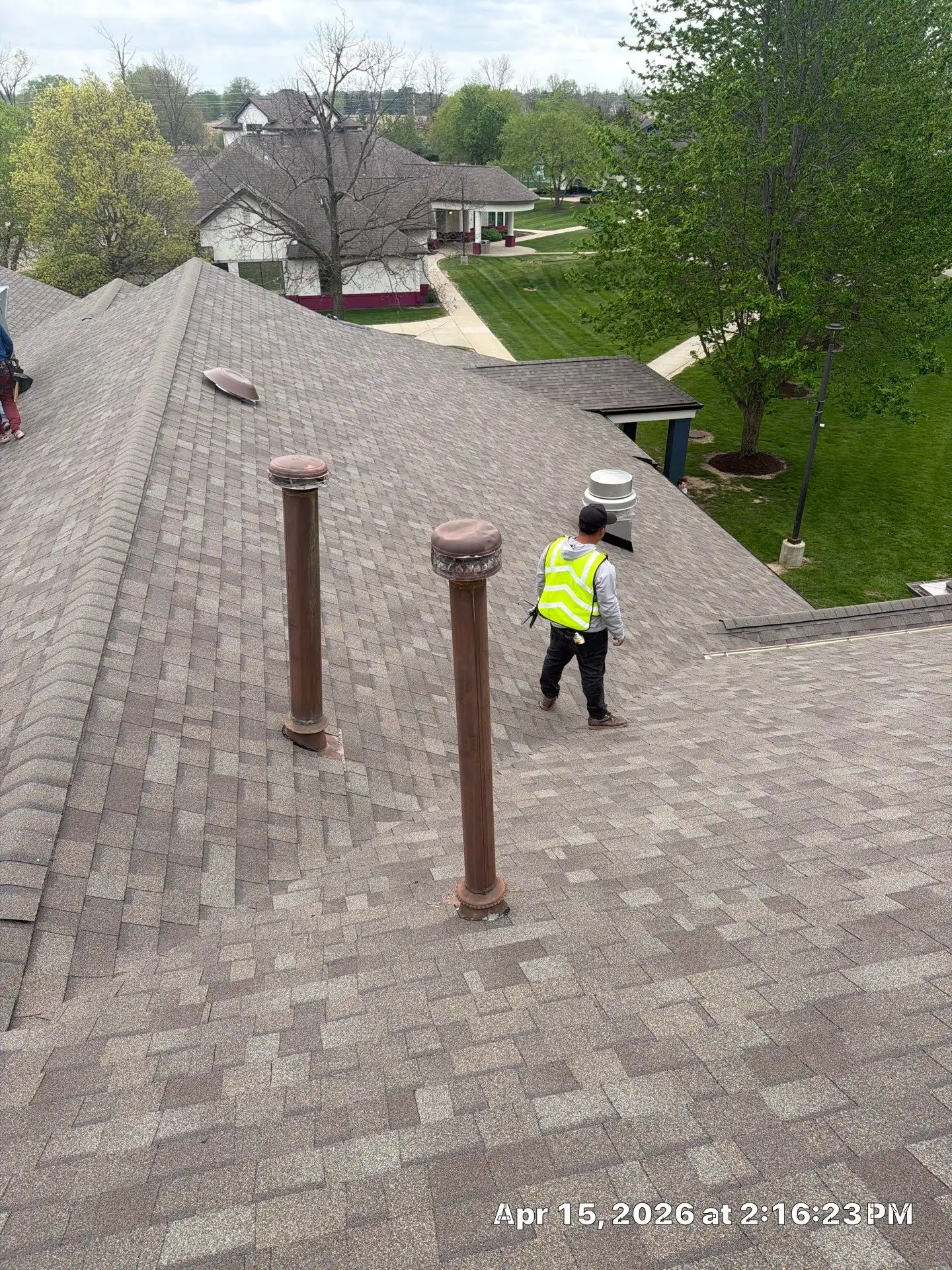
The Warehouse Owner Who Almost Replaced a Roof That Did Not Need It
That first property manager, we will call him Dan, had a 14 year old TPO roof. A competitor told him the whole thing was shot. When our team pulled core samples in four corners and the center, only one had wet insulation underneath. The rest of the deck was dry, the membrane was chalked but intact, and the seams were holding. We patched the wet section, replaced about 180 square feet of insulation, and quoted a silicone coating across the full field. His replacement bid had been around $8.50 per square foot. Our restoration came in just under $3.10. He kept his roof, kept his tenants open, and signed a five year maintenance plan. If your building tells a similar story, our commercial roof inspections are the honest starting point.
What stuck with Dan was the core sample part. He told us later that no other contractor had offered to actually cut the membrane and look. They had walked the roof, taken pictures from a drone, and quoted a tear off. The Angola Commercial Roofing approach with him was simple. We assume the roof is restorable until the deck tells us otherwise. That mindset has saved Angola owners real money on dozens of warehouses, flex spaces, and light industrial buildings over the last few seasons.
The Restaurant Group That Waited Too Long
Not every story ends with a coating. A Angola restaurant group called us in August about ponding water and a stained ceiling tile over the prep line. The EPDM was 19 years old, the insulation was wet across nearly 40 percent of the field, and the deck showed rust streaks at the drains. Coating that roof would have been throwing good money after bad. We told them directly, the way we tell every customer, that restoration was not the right call. They moved forward with commercial roof replacement instead, and we coordinated a phased install so the kitchen never shut down. The lesson from that job is simple. Coating works when the substrate is sound. Once moisture is trapped under the membrane, you are sealing in the problem, not solving it.
There was a second lesson buried in that project. The owner had been quoted a coating job two years earlier by a traveling crew, and he wished he had said yes. Two years of additional saturation pushed the insulation past the point where any restoration product could help. If you are sitting on chalked membrane and minor seam fatigue right now, that is the window. Wait through another wet season and the conversation changes from coating to tear off, and the budget triples.
The Office Park That Got It Right the First Time
The cleanest restoration job we did last year was a three building office park where the owner called us early. The roofs were 12 years old, no leaks yet, just some chalking and minor seam stress. We power washed, reinforced 340 linear feet of seams with fabric and base coat, primed the field, and rolled a silicone topcoat at 22 wet mils across all three buildings. Total cost worked out to around $2.90 per square foot. Compared to replacing all three roofs in five years at projected pricing, the owner saved well into six figures and kept the original membrane working underneath. That is the version of this story we want every Angola owner to get to write.
Why Silicone Keeps Winning Local Bids
If you are wondering which coating chemistry to ask about, here is what our Angola estimates keep landing on, and why.
- Silicone handles ponding water better than acrylic, which matters on flat roofs with sluggish drains.
- Acrylic costs less up front and looks great year one, but it softens under standing water and tends to need recoating sooner.
- Silicone reflectivity stays high through Indiana summers, which we see translate into measurable cooling load reductions on metal buildings.
- Most silicone systems carry 10 to 15 year manufacturer warranties when applied at correct mil thickness, usually 20 to 25 wet mils.
- Silicone does not require a recoat to maintain warranty in most cases, which keeps your long term maintenance budget predictable.
The Self Storage Facility and the Hail Surprise
A self storage owner in Angola called after a spring hail event. He thought he needed a coating because the membrane looked beaten up. When we walked the roof, the bigger issue was bruised insulation and two split seams. We do not just sell what we showed up to sell. We tarped the active leak the day of inspection, filed photos that supported his carrier conversation, and then split the work. The damaged sections went through the storm claim as repair, and the rest of the field got a silicone coating six weeks later, paid out of pocket. If you are mid claim, our notes on the commercial roof insurance claim process walks through what carriers actually look for.
That split scope ended up saving him close to $14,000 versus a single all cash bid. Adjusters care about what is storm related and what is wear and tear, and a coating contractor who can document the difference with dated photos and core samples gives the owner a much stronger file. We have walked enough roofs with adjusters now that we know which language and which images move a claim forward.
How Angola Commercial Roofing Decides What Your Roof Actually Needs
Every restoration conversation we have in Angola starts the same way. A phone call where we ask about age, leak history, and what you are seeing from inside the building. Severity gets assessed right there, before we ever climb a ladder. If there is an active leak, tarping and dry in move to the top of the list and the inspection gets scheduled fast behind it. From there, we pull cores, map moisture, and put a written recommendation in your hands. Sometimes the answer is a full coating system. Sometimes it is a targeted repair and a recheck next spring. Sometimes, like the restaurant group, it is replacement. The promise from Angola Commercial Roofing is not that coating is always the answer. The promise is that the recommendation matches what your roof is actually telling us.
What the Numbers Actually Look Like in Angola
One question we hear on almost every estimate is, how much per square foot. The honest answer depends on the existing roof, the coating system, and how much prep the membrane needs. Acrylic on a clean TPO field runs in the $1.80 to $2.75 range. Silicone on EPDM lands closer to $2.50 to $3.75. Silicone on metal, where we are also chasing fastener heads and rust spots, comes in around $2.75 to $4.25 per square foot. A full tear off and replacement on the same buildings would be quoted between $7.50 and $12 per square foot depending on insulation thickness and deck type. Those ranges reflect typical Central Indiana conditions, prep level, and access. Tight ponding repair and seam reinforcement push the higher end of every number above.